

Teal Sofa Ideas: How to Style It In Your Living Room
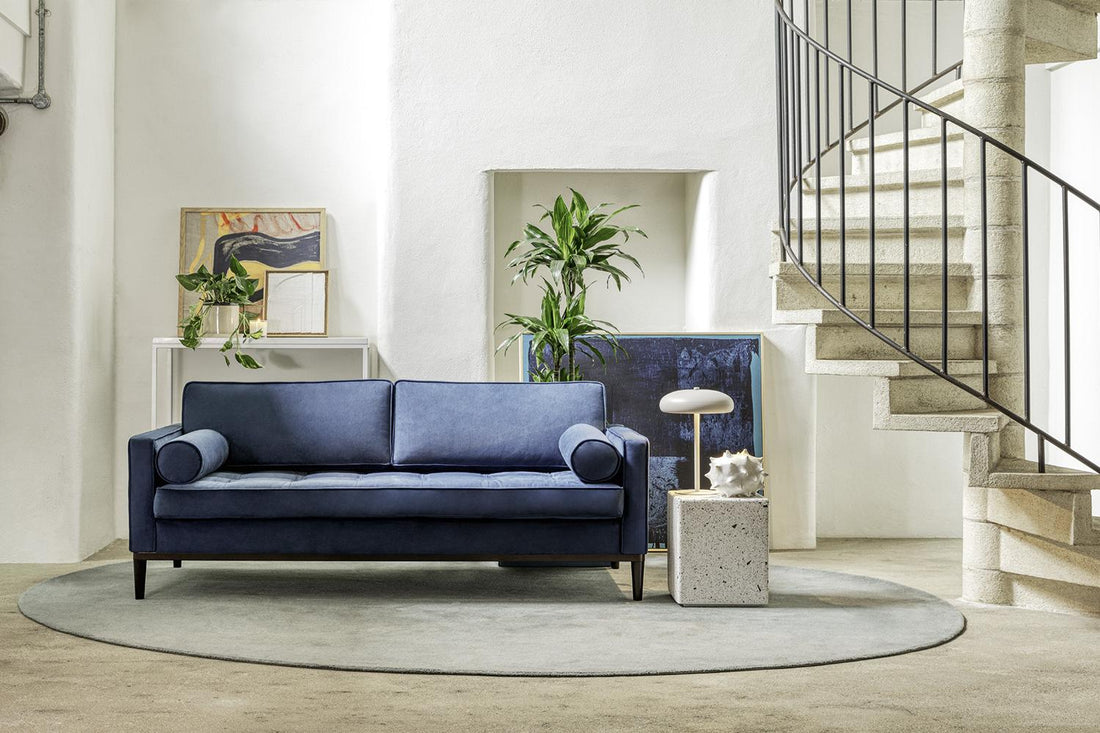
Teal Sofa Ideas: How to Style It In Your Living Room
Teal is one of the most consistently popular sofa colours in the Swyft range, and it is easy to understand why. It sits at the intersection of blue and green, which gives it a quality that neither colour quite has on its own: the calm of blue combined with the freshness of green, without leaning too hard in either direction. The result is a colour that reads as bold but not aggressive, rich but not heavy.
Styling a teal sofa well comes down to understanding its undertone and working with it rather than against it. This guide covers wall colours, colour pairings, fabric choices, cushions, rugs, and the interior styles that suit teal best.
Understanding teal: where it sits in the colour spectrum
Teal is not a single shade. It ranges from lighter, more blue-green tones closer to duck egg or Kingfisher, through to deeper, richer shades that sit nearer to petrol or dark teal, where the blue takes over almost entirely, and the green becomes a subtle undertone.
It is worth knowing the difference between teal and duck egg before choosing. Duck egg is lighter, softer, and more washed-out: a pale blue-green with a powdery quality that reads as delicate and cottage-adjacent. Teal is deeper, more saturated, and more blue-dominant. If you want the freshness of a blue-green without the depth of true teal, duck egg is the softer option. If you want a colour that functions as a proper focal point, teal is the one.
That is also why teal works as well as it does long-term. It has enough depth to function as a focal point without dominating a room, pairs with both warm and cool palettes, and ages well. Unlike some trend-led choices, teal has been present in interior design for decades and shows no sign of leaving.
The depth and undertone of your specific sofa makes a significant difference to how it should be styled. A lighter teal reads as fresh and coastal; a deeper teal reads as jewel-toned and dramatic. Both are strong choices for a living room, but they call for different surroundings.
At Swyft, Velvet Teal is one of the bestselling colours across the range, available on sofas including the Model 01, Model 02, and the Model 03 modular corner sofa, as well as the Kingfisher Velvet option for those drawn to a more vivid, brighter blue-green tone. If you are deciding between shades, order a free swatch to see how they read in your own light before committing.

What wall colour goes with a teal sofa?
This is the question most people start with, and the answer is genuinely flexible. Teal works across a wider range of wall colours than most people expect.
White and off-white walls are the most common pairing and consistently the most effective. A clean white background gives the sofa space to lead the room without competition. Off-white with a warm undertone prevents the room from feeling cold, which can happen when cool-toned teal meets a cool-toned white. Scandi interiors almost always use this combination: white walls, teal sofa, natural wood, simple accessories.
Warm grey walls sit comfortably alongside teal and create a more restrained, sophisticated scheme. The key is choosing a grey with a warm undertone rather than a cool or blue-grey. A dove grey or greige works well and gives the teal sofa more prominence than it would have against a stark white. Cool grey, particularly anything with a blue undertone, risks flattening both colours and making the room feel muted. If you already have cool grey walls and a teal sofa, the fix is usually to warm up the room through natural wood, brass accents, and textured textiles rather than repainting. For more on this, see the Ideal Home guide to teal and grey living rooms.
Dark walls are a bold but genuinely rewarding option with teal. Charcoal, deep slate, or dark forest green all provide a rich backdrop that draws out the jewel-toned quality of a deep teal velvet. This combination works particularly well in rooms with limited natural light, where the drama of the contrast is an asset rather than a problem. Keep accessories pared back to let the contrast do the work.
Blush and soft pink walls might seem counterintuitive, but blush and teal is a well-established pairing in contemporary interiors. The warmth of the pink balances the coolness of the teal, and the combination feels both modern and liveable. Better suited to lighter teal tones than the deepest shades.
What to avoid: Cool blue-grey walls with a deep teal sofa can cause the two colours to blend into each other, losing the contrast that makes teal effective as a focal point. Similarly, walls with a strong green undertone can work against teal rather than with it, depending on the specific shades involved. When in doubt, sample both and view them in the room together.

What colours go with a teal sofa?
Teal is one of the more versatile sofa colours precisely because it sits between warm and cool on the spectrum. It can be pushed in either direction depending on the accessories around it.
Mustard and warm yellow are the classic complement to teal. They sit on the opposite side of the colour wheel, which creates a contrast that feels energetic without being jarring. Mustard yellow cushions on a teal sofa is a mid-century modern staple for good reason. It works. Use mustard in cushions, throws, and small accessories rather than in large pieces, and the balance stays right.
Burnt orange and terracotta work on the same principle as mustard but with more warmth and earthiness. Teal with terracotta accessories and warm wood furniture creates a room that feels both bold and grounded. Particularly effective with deeper, darker teal tones where the warmth of the orange cuts through the richness of the blue-green.
Warm brass and gold metallics do considerable work in a teal living room. They add warmth, reflect light, and pair naturally with the jewel-toned quality of teal velvet. A brass coffee table, brass lamp bases, or gold-framed artwork all bring the room together without adding another competing colour.
Warm neutrals in cream, sand, warm white, and warm stone give a teal sofa space to breathe. In a room where the teal is the only strong colour, warm neutrals in the walls, rug, and secondary soft furnishings provide the resting point that keeps the scheme from feeling overdone.
Navy and deep blue work with teal in a tonal scheme, particularly if the teal is on the lighter end of the spectrum. Layering teal with deeper blue accents through cushions or artwork creates a cohesive, painterly palette that suits both contemporary and more traditional rooms.
Coral and soft pink provide contrast by placing warmth against coolness. Blush pink cushions on a teal sofa are a softer, more contemporary alternative to the mustard pairing. Coral is bolder and works better in rooms with more natural light.
What to avoid: Multiple competing saturated colours around a teal sofa. Teal is strong enough to anchor a room on its own. If everything else is also bold, the sofa loses its impact. The most successful teal living rooms tend to have one strong colour doing the work and everything else supporting it.

Teal sofa cushions: what to choose
Cushions are where a teal sofa either finds its footing or gets cluttered. The temptation is to match teal with teal, which creates a uniform effect without interest. The better approach is contrast and texture.
Mustard and amber are the most proven choice. Two or three mustard velvet cushions on a Velvet Teal sofa create a scheme that feels considered and complete.
Warm cream and ivory provide relief and stop the sofa from dominating the room visually. Textured fabrics in boucle, chunky knit, or linen in cream or warm white add depth without adding colour.
Burnt orange and rust add warmth that balances the coolness of teal. One or two cushions in this family alongside a neutral cushion is enough.
Blush and dusty pink work particularly well with lighter teal tones. The combination is warm and contemporary without being predictable.
Tonal blue and teal can work if the cushions are significantly lighter or darker than the sofa. Two teal shades at the same depth will simply disappear against each other.
The number of cushions matters as much as the colours. Three well-chosen cushions tend to look more intentional than seven that are competing. To summarise the strongest pairings: mustard yellow and warm amber are the classic choice; burnt orange and terracotta add warmth without going as bright; cream and ivory in textured fabrics provide relief and balance; blush pink works well with lighter teal tones. Swyft's cushions and accessories range includes options across a range of colours and textures suited to a teal sofa.
What rug goes with a teal sofa?
The rug choice affects how grounded the sofa feels in the room. Too much contrast and the sofa floats; too little and the room loses definition.
Natural fibre rugs in jute, sisal, or seagrass are the most versatile choice. They add warmth and texture without introducing another colour to manage. Against a teal sofa, the organic, earthy quality of a natural fibre rug provides the grounding note the room needs.
Warm neutral rugs in cream, sand, or soft stone keep the floor light and give the sofa space. These work well in rooms where the sofa is the intended focal point and everything else is supporting.
Patterned rugs with teal accents or earthy tones can work well if the pattern is not competing with the sofa for attention. A geometric or distressed-look rug in neutrals with a hint of teal or mustard ties the room together without overcomplicating it.
Dark rugs in charcoal or deep grey anchor the room more strongly and suit the combination of teal with dark walls or deeper colour schemes. Be cautious of deep blue rugs, which can merge visually with the sofa rather than framing it.

Interior styles that suit a teal sofa
Teal is one of the most cross-stylistic sofa colours, but it has particular natural homes.
Mid-century modern is where teal feels most at ease. The jewel-toned quality of teal velvet, paired with warm teak or walnut furniture, a wooden coffee table, and a simple geometric rug, is one of the most cohesive interior combinations available. The Model 02's mid-century silhouette is particularly well-matched to this aesthetic in Velvet Teal.
Scandi and contemporary rooms use teal as the single point of colour in an otherwise neutral scheme. White walls, natural oak or ash floors, minimal accessories, and a teal sofa as the focal point. Clean, confident, and very easy to live with. This approach also answers the question of whether teal works in a small living room: it does, provided everything else stays light. White or off-white walls, a natural fibre rug, and light curtains give the sofa space without the room feeling heavy. The issue in smaller rooms is usually the accumulation of dark textiles around the sofa rather than the sofa colour itself. For more on colour choices in compact spaces, see our guide to best colours for small living rooms.
Coastal and relaxed schemes suit lighter teal tones more than the deeper shades. Lighter teal with natural linen, rattan, jute, and washed wood creates an effortlessly breezy feel that works particularly well in rooms with garden access or good natural light.
Eclectic and maximalist interiors can accommodate teal easily because it holds its own alongside other bold colours without being overwhelmed. Teal with jewel-toned accessories in burgundy, deep green, or mustard creates a rich, layered palette.
Traditional and heritage rooms benefit from the richness of deep teal velvet, particularly alongside dark wood, brass accents, and classic or Chesterfield-adjacent silhouettes.
Teal sofa versus blue sofa: what is the difference?
Teal and blue are often grouped together, and while they are related, they behave differently as a sofa colour. Teal has green in it; blue does not. That green undertone is what gives teal its freshness and versatility. It connects naturally to nature-inspired palettes, green walls, and earthy accessories in a way that a pure navy or blue cannot.
A navy or deep blue sofa leans more formal and traditional. Teal leans more contemporary and cross-stylistic. If you are drawn to teal but also considering navy, the question is usually whether you want the green-adjacent warmth and freshness of teal, or the cooler, more classic quality of blue.
Swyft's blue sofas collection covers both teal and deeper blue options, including Velvet Teal, Kingfisher, Airforce, and Indigo. For something adjacent but more botanical, the green sofas collection covers sage, olive, Vine, and Forest Velvet.
Browse the Swyft teal sofa range, including Velvet Teal across multiple models and the Kingfisher Velvet option, or order free fabric swatches to see how the shades look at home before choosing.
For more colour guidance, see our guides to blue sofas, green sofa living room ideas, and how to choose a sofa colour.


