

7 Bedroom Changes That Will Help You Sleep Better in Summer

7 Bedroom Changes That Will Help You Sleep Better in Summer
The next heatwave is coming. It always does, usually with about 48 hours' notice, right in the middle of the week. And then you'll spend three nights lying on top of your duvet at 2am, staring at the ceiling, wondering if it's acceptable to sleep in the garden.
It doesn't have to go that way. Most people try to fix the temperature on the night — fan pointed at the bed, windows flung open, bag of frozen peas on the forehead. The smarter approach is to fix the bedroom before it gets hot. These seven changes make the biggest difference.
1. Swap your duvet before the heat arrives
The UK and Ireland sit in a strange duvet middle ground. Too cold for a summer-weight duvet most of the year, too warm for a winter one in July. Most people compromise with something in between that's wrong in both directions.
A dedicated summer duvet (4.5 tog or lower) in a breathable fill like cotton, bamboo or silk makes a noticeable difference to sleep temperature. Linen duvet covers go a step further — linen regulates temperature better than cotton and gets softer with every wash. The swap takes ten minutes and works every time without needing any other intervention.
If you already run warm, consider a top sheet only in the height of summer. No duvet at all. The permission to do this is not given nearly enough.
2. Rethink your mattress
This one is harder to act on quickly, but worth knowing for when you're next in the market. All-foam mattresses retain heat. The foam compresses around your body, reducing airflow and trapping warmth. If you consistently sleep hot, this is often the reason.
Open-coil and hybrid mattresses allow more airflow through the sleeping surface because the spring structure creates space for air to circulate. Pocket sprung mattresses are particularly good for this. They also tend to give better motion isolation if you share a bed — a summer bonus when one person runs hotter than the other.
Is a memory foam mattress hotter to sleep on? Yes, typically. The dense foam that makes memory foam comfortable also restricts airflow. If you're a hot sleeper, a hybrid or pocket sprung mattress will sleep significantly cooler.

3. Get blackout and thermal curtains — not just blackout
Blackout curtains block light. Thermal curtains block heat. In summer you need both, and they're often not the same product.
A room that's light by 5am is a room where you stop sleeping at 5am, regardless of temperature. A room that's been warming up through south-facing glass since 7am will be 3 to 4 degrees hotter by bedtime than one that was shaded during the day. Both problems matter for sleep quality, and both are solved at the window.
Thermal-lined blackout curtains cover both. Close them before the heat builds in the morning, not just at night. The difference by 10pm is significant.
4. Strip the bed back
The instinct when hot is to remove the duvet. The better instinct is to remove everything you don't need from the entire bed. Decorative pillows that sit at the foot of the bed. Throws. Extra blankets. The mattress topper that made the bed cosier in winter.
Each layer retains heat. A stripped-back bed — fitted sheet, one pillow per person, light duvet or top sheet — has significantly more airflow than the layered version you might sleep in during winter. The bed should look sparse in July. That's correct.
Your bed frame also plays a role. Divan bases trap heat underneath the mattress; frames with legs allow air to circulate from below. If you're buying a new bed and sleep hot, opt for a frame rather than a base.
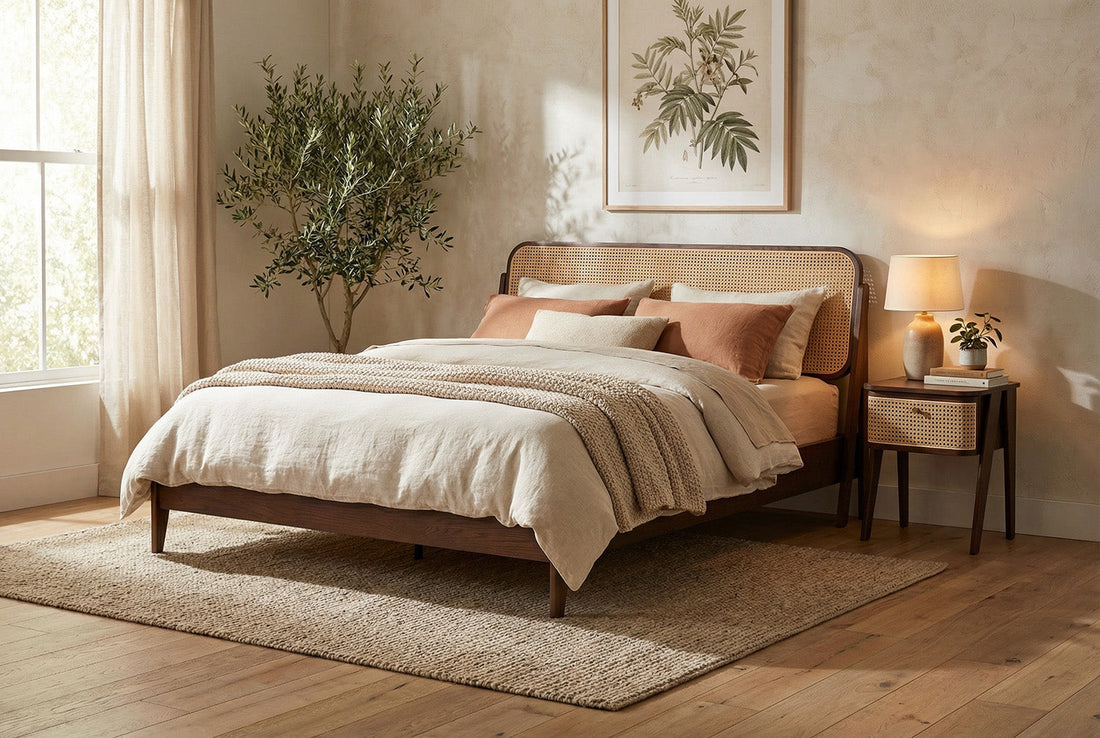
5. Move the bed away from the wall if you can
A bed pushed into a corner or against an external wall is in contact with the warmest surface in the room. External walls absorb heat during the day and release it overnight. It's a slow, sustained warmth that contributes to high ambient temperature in the bedroom without being immediately obvious as the cause.
If you have room to pull the bed away from external walls, do it in summer. Even 20 to 30cm of gap makes a difference to airflow around the mattress. It's an easy, free change that most people have never tried.
6. Cut the screens before bed
This one is not about temperature, but it compounds the problem. Blue light from phones and laptops suppresses melatonin production, making it harder to fall asleep. In summer, when your body's natural sleep cues from darkness are already delayed by late sunsets, this effect is more pronounced.
In a heatwave, the combination of high temperature and delayed melatonin makes falling asleep genuinely difficult. Cutting screens an hour before bed doesn't fix the heat, but it removes one of the compounding factors. A book, a podcast, or simply lying in the dark for a few minutes before trying to sleep gives your body a better chance of switching off.
7. Build a heatwave kit now, before you need it
The worst time to solve a sleep problem is during the problem. When it's 28 degrees at midnight and you can't sleep, you're not in the best state to make good decisions.
A prepared bedroom for a heatwave looks like this: summer-weight duvet already on the bed, blackout curtains closed from morning, a fan positioned to face outward in a window (drawing hot air out rather than circulating it), a cold glass of water on the bedside table, and phone off or face down before 10pm.
None of this requires anything expensive or complicated. It requires doing it in advance rather than scrambling at midnight.
What's the fastest way to cool down a bedroom before sleep? Open windows on opposite sides of the room from early evening to create cross-ventilation. Close them and the curtains before you go to bed if the outside temperature hasn't dropped enough. A fan facing outward in the window draws hot air out. A bowl of ice in front of a second fan adds a cooling effect while you're falling asleep.
The short version
Swap the duvet before the heatwave arrives. Get thermal blackout curtains. Strip the bed back. Move it off the wall if you can. Cut the screens. And prepare in advance — not at 2am when it's already too late.


