

How to Set Up Your Living Room for the World Cup

How to Set Up Your Living Room for the World Cup
The first kickoff is on 11 June. That gives you just enough time to sort your living room out before the group stage kicks into gear — and before you end up spending three weeks squinting at a screen from the wrong angle on an uncomfortable chair.
Whether you're hosting a crowd or just making the most of it at home, a few small changes to your setup will make a noticeable difference. Here's where to start.
1. Get your sofa in the right position
The most common mistake people make when watching football at home is not moving the sofa at all. If your seating faces a fireplace or faces away from the screen, now is the time to rethink it.
The ideal position is directly in front of the TV, close enough that you're not straining but far enough that the picture fills your natural field of view. A rough guide: sit at a distance roughly 1.5 to 2 times the diagonal size of your screen. For a 55-inch TV, that's around 2 to 2.5 metres.
If your sofa is currently floating at an angle or pushed against a wall that doesn't face the screen, shift it. Even a temporary rearrangement for the duration of the tournament is worth the effort.
Can you put a sofa in the middle of the room?
Yes — and for match days, it often makes more sense. Floating your sofa away from the wall gives you more flexibility with viewing angles and makes it easier to add extra seating around it.

2. Maximise your seating without cramming the room
A World Cup group stage means potentially three games a day. If you're having people round regularly, you'll need seating for more than just the sofa's stated capacity.
The best options for adding seats without cluttering the room:
1. An armchair or two — easy to pull in from another room and position around the TV. If you already own an armchair that lives elsewhere in the house, this is the time to temporarily relocate it.
2. A footstool or ottoman — doubles as a seat when needed and tucks out of the way when not. A storage ottoman is especially useful if you need somewhere to stash cushions or throws mid-game.
3. Floor cushions — practical for overflow guests and easy to store. Not the most elegant solution, but no one's reviewing your interior design choices at 9pm during a knockout game.
For permanent setups, a corner sofa is the most efficient way to seat more people without losing floor space. L-shaped and modular sofas are particularly well suited to match-day hosting — they create a natural viewing arc and everyone gets a decent sightline.
How do you seat a group for watching football?
Arrange seating in a shallow arc or horseshoe shape facing the screen. Avoid rows — they create a 'cinema' hierarchy where the people at the back get the worst view. Everyone should have a roughly equal line of sight to the TV.

3. Think about the screen height
It's easy to focus on where the sofa goes and forget about where the screen is. If your TV is mounted high on a wall — above a fireplace, for example — watching a 90-minute match will give everyone a neckache by half time.
For extended viewing, eye level when seated is the right position for the centre of the screen. If your TV is too high, it's worth temporarily repositioning it to a TV unit or stand for the duration of the tournament, if that's practical.
If it's mounted and can't be moved, tilt it downward where possible. Most wall brackets allow for some vertical adjustment.

4. Sort the lighting
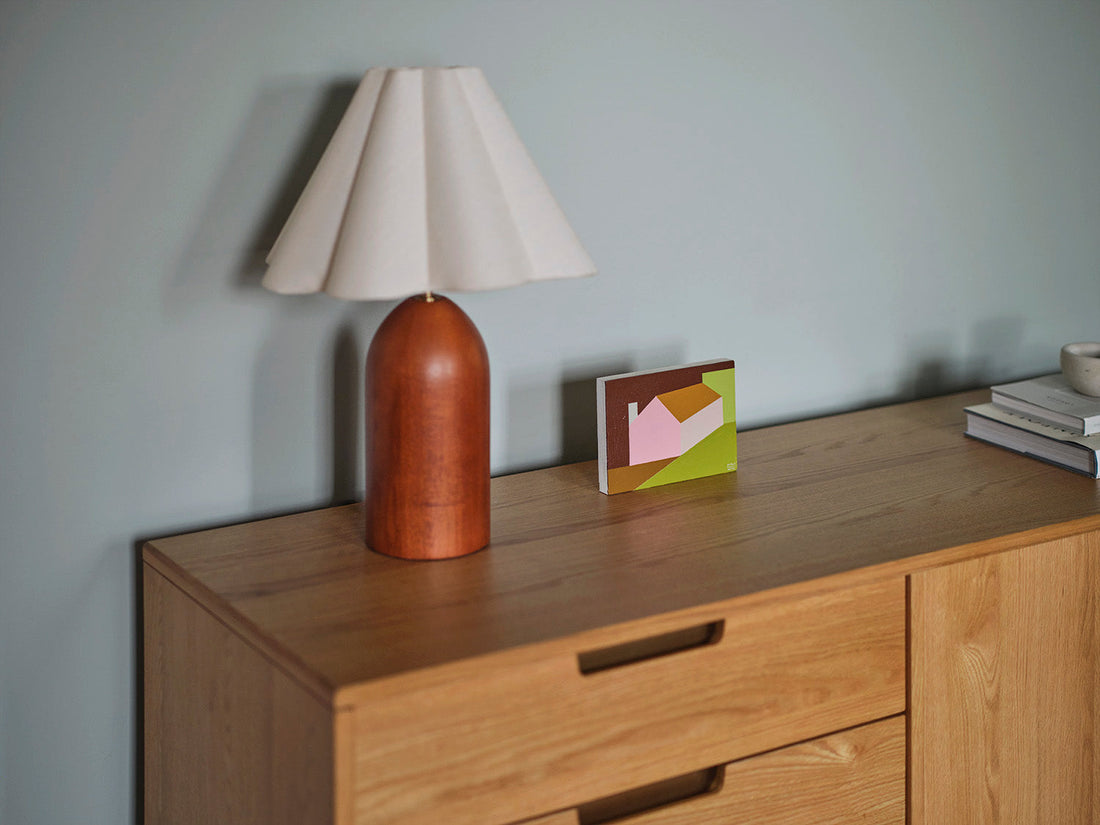
Overhead lighting in most living rooms is too harsh for evening matches and creates glare on the screen. Floor lamps and table lamps give a warmer, more comfortable ambience — and they don't bounce off the TV the way a ceiling light does.
A few practical tweaks:
1. Turn off the main ceiling light during evening games and use side lamps instead.
2. If your TV is against a wall, a lamp or LED strip behind the screen reduces the contrast between the bright screen and the dark wall around it — this reduces eye strain over long viewing sessions.
3. Keep the room bright enough that people can see what they're doing, but dim enough that the screen is the clear focal point.
Does lighting affect how you experience watching TV?
Yes, more than most people expect. High contrast between a bright screen and a very dark room causes eye fatigue fairly quickly. Bias lighting — a gentle light source behind the TV — is the simplest fix.
5. Add throws and cushions for the long haul
A 120-minute match with extra time and penalties is a long time to be sitting still. The more comfortable your sofa setup, the more enjoyable the experience — for you and your guests.
Throws are the easiest upgrade. Drape one over each seat so people can grab them without having to ask. A mix of textures — a knitted throw, a cotton one — works well if you want the room to look considered rather than just practical.
Extra cushions serve a similar purpose. They give people something to adjust the support behind them, and they double as something to hide behind when the penalties start.
What cushions work best for a sofa?
Cushions in a complementary colour to your sofa — rather than a match — tend to look more considered. For comfort during long viewing sessions, a mix of firm and soft cushions gives people options.

6. Clear the floor
This one sounds obvious, but it makes a genuine difference. A living room that's been tidied — cables managed, side tables pulled in close, a clear path from the door to the sofa — feels more relaxed and less cluttered when there are several people in it.
Move anything that doesn't need to be there. Side tables are useful — they give people somewhere to put a drink without having to reach for the floor — but they work best when they're positioned within easy reach of every seat, not just the main sofa spots.
If you've got a coffee table, pull it close enough that people can actually use it, but not so close that it becomes a shin hazard every time someone stands up. About 40–45cm between the sofa and the table is the practical sweet spot.
So, how do you make a living room work for entertaining?
The principles are the same whether it's a dinner party or a football match. Sightlines, seating capacity, and easy access to surfaces all matter. More on setting up a sociable living room here.


