

How to Host Indoors This Summer

Summer hosting doesn't always go to plan. The table was set, the garden looked good, and then it rained. Or it's warm enough outside but not quite warm enough to sit still. Or the evening drops off faster than expected and everyone ends up inside anyway.
None of that has to derail things. The homes that handle summer hosting well aren't the ones with the biggest gardens. They're the ones set up to move fluidly between spaces, or to make the inside feel like the right place to be. Here's how to get there across your living room, dining area, and garden.
The living room: set it up for people, not just for living
Most living rooms are arranged around a television. That's fine for a Tuesday evening, but it's the wrong focal point for a gathering. When you're hosting, the arrangement needs to work for conversation — people facing each other, enough seating for everyone, and nothing that makes the room feel like a queue.
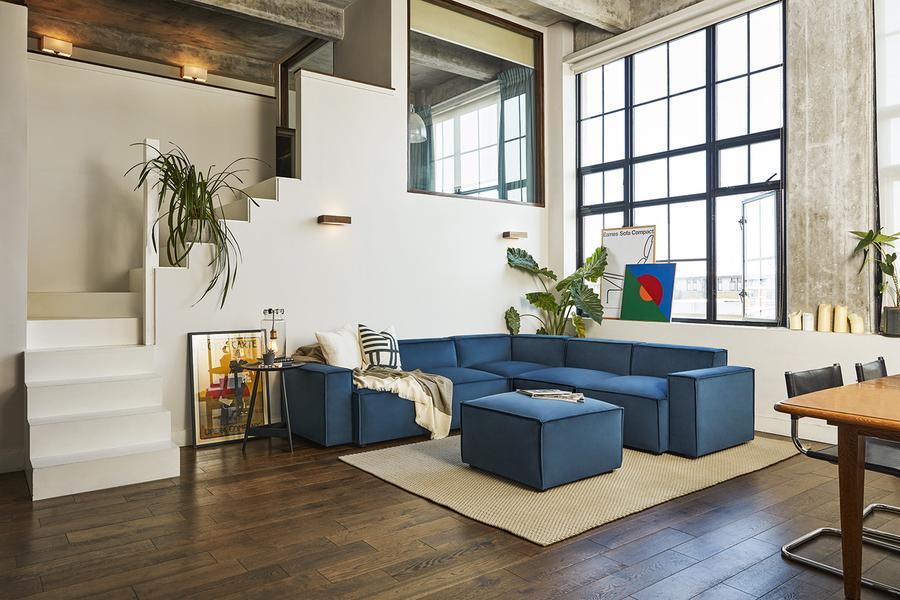
Reconfigure before guests arrive. Pull seating inward rather than against the walls. A sofa and two chairs grouped around a coffee table creates a proper social arrangement, enclosed enough to feel intentional, open enough to move through. If you have a modular sofa, this is where it earns its place: you can adapt the configuration to the space and the number of people without it feeling like a compromise.
Add seats without adding clutter. Ottomans and footstools double as extra seating when needed and go back to their usual function when the evening winds down. A well-placed pouffe can seat one more person without the room feeling overcrowded. Avoid bringing in dining chairs. They read as afterthought seating and make a living room feel like a waiting area.
Sort the lighting before the evening starts. Overhead lighting flattens everything and makes a room feel like a shop floor. For a summer evening, you want warmth at lower levels. Floor lamps, table lamps, and candles do more for atmosphere than any overhead can. Switch everything on and check how it reads before guests arrive, not after.
Keep surfaces clear and purposeful. Your coffee table will be used. Make sure there's space on it, a tray, drinks, somewhere for people to put things down. A cluttered surface makes a room feel smaller and more stressful than it needs to.
The dining space: make it feel set up, not just set
The dining table is the centre of any sit-down gathering, and the difference between a table that feels considered and one that just has plates on it is smaller than most people think.
Start with the table itself. If you regularly host more than four people, an extendable dining table is worth having. The Dining Table 01 extends to seat eight, enough for a summer dinner party without permanently taking up the extra space. Set it fully before anyone arrives so the room looks ready rather than in progress.
Layer the table without overcomplicating it. A linen runner or tablecloth gives the table some weight. Candles at the centre, even unlit until the evening drops off, signal that the meal has been thought about. Keep centrepieces low enough that people can see each other across the table. A bowl of fruit, a few small vases, scattered tea lights. Anything taller than eye level breaks conversation.
Make sure the chairs are comfortable enough for a long evening. Dining chairs that look good but aren't built for two or three hours of sitting are a problem most people don't notice until they're in one. Dining Chair 01 is designed with proportions that work for both a quick lunch and a proper evening, with an upholstered seat and a back that actually supports. Worth checking before you host rather than during. If you're regularly seating larger groups, a dining bench along one side of the table is a practical way to add capacity without adding chairs.
Think about how food reaches the table. If you're cooking in a separate kitchen and carrying through, make sure the path is clear. A sideboard close to the dining area gives you somewhere to set things down mid-service rather than hovering with a hot dish. A dedicated drinks station, even just a tray on a side table with a bottle, a jug of water, and glasses, means guests can help themselves and you're not running back to the kitchen constantly.

The garden: keep it in play even in uncertain weather
Even if the plan is to host indoors, the garden is still part of the experience. People step out during the evening, the doors stay open, the space reads as part of the whole. And if the weather holds, or improves, you want the option to move out there.
Covers make the difference between a garden that's usable and one that isn't. A garden sofa set or garden dining set left uncovered in unpredictable weather means wet cushions, which closes the option entirely. Fitted furniture covers keep everything dry and ready, made to fit the range specifically, so there's no improvising with ill-fitting alternatives. Ten minutes before guests arrive, pull the covers off and the garden is ready.
Keep the garden set up as a second space, not a storage area. Chairs stacked in the corner, a table pushed to one side signals that the garden is off limits rather than on offer. Even if you're not sure people will use it, having the garden furniture set out properly gives the evening somewhere to breathe. People gravitate outside when there's something to go to.
String lights do significant work for very little effort. A garden that's lit in the evening reads completely differently to one that's dark and uninviting. Warm string lights along a fence line or across an overhead frame give you a usable outdoor space well into the evening even when the temperature drops. No installation needed. Most run off a plug or a portable battery pack.
Have a transition plan. If it rains mid-evening, the move inside goes more smoothly if it's been thought about in advance. That means the indoor space is already set up to absorb guests (see above), there are enough seats for everyone inside, and you're not frantically rearranging while trying to keep things relaxed. The pivot from outside to inside should feel like part of the evening, not a disruption to it.

A few things that apply to all three spaces
Get the temperature right before guests arrive. A room that's too warm feels oppressive. A garden that's too cold drives people in after twenty minutes. Open windows and doors in the hour before people arrive to get the air moving. For the garden, a couple of outdoor candles or a firepit make a surprising difference to how long people stay once the evening cools.
Music in the right place. Sound carries differently in summer, with doors open and the garden in use, so think about where music is coming from. A speaker in the living room with the doors open usually covers both spaces adequately without being loud in either.
Have more seats than you think you need. The most consistent mistake in home hosting is underestimating how many people want to sit down at once. If you're hosting eight, set up for ten. The extra chairs or the footstool you didn't think you'd need are much easier to have in place than to find mid-evening.


